* All product/brand names, logos, and trademarks are property of their respective owners.
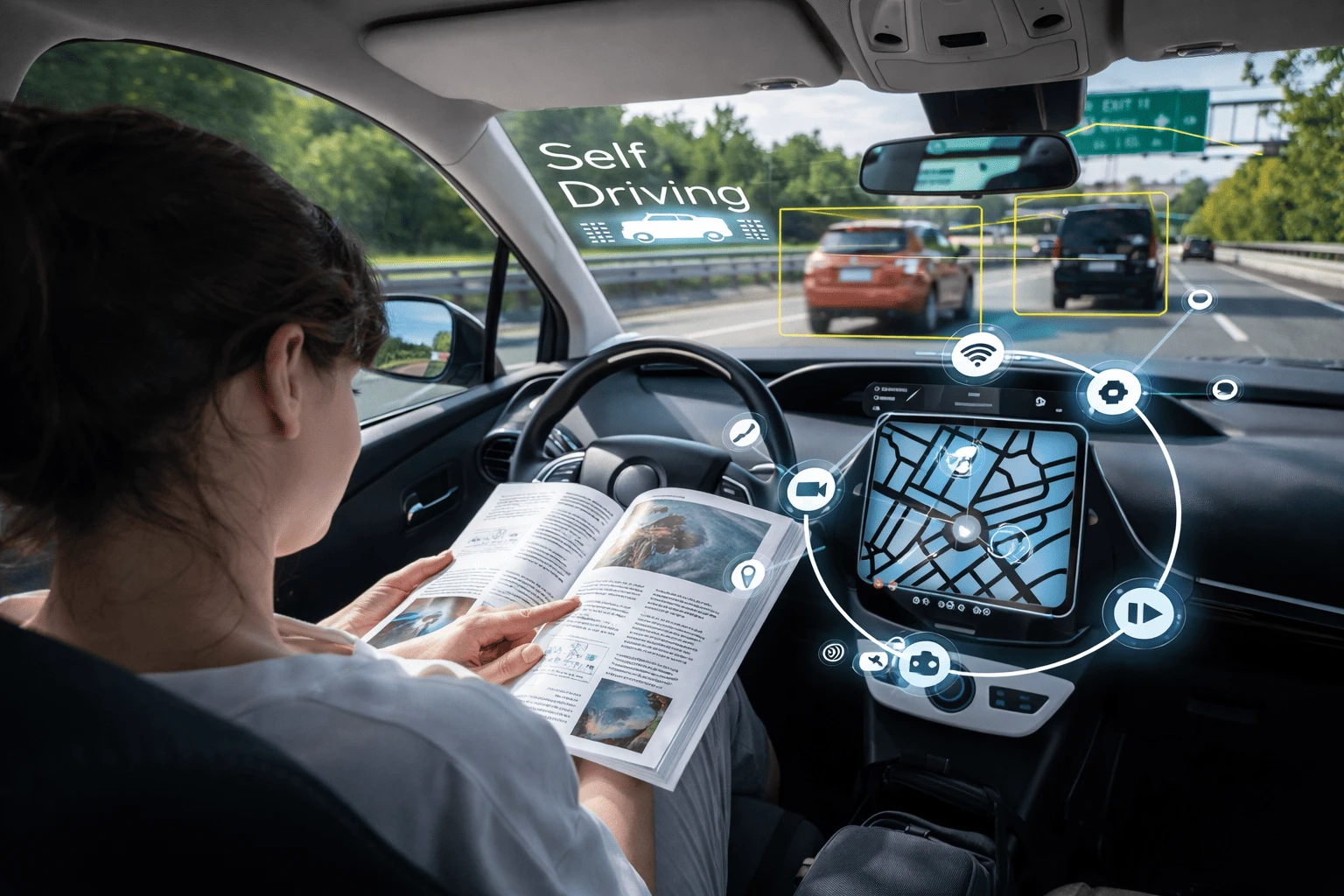
If you haven’t driven a new-generation vehicle recently, 2026 might completely change your perspective. Cars are no longer just machines with engines and wheels — they are becoming intelligent systems on the move. The biggest transformation in the automobile industry today isn’t only about electric vehicles or sleek designs. It’s about AI in cars and how smart technology is redefining the entire driving experience.
A few years ago, smart features meant parking sensors, cruise control, or basic voice commands. Helpful? Yes. Revolutionary? Not quite. But in 2026, we’re seeing the rise of AI-defined vehicles, where advanced software acts like a real-time co-pilot. These systems don’t just follow commands — they understand context, predict outcomes, and assist drivers in smarter ways.
This shift is powered by what experts call Agentic AI and “physical AI,” meaning vehicles can reason through complex situations instead of simply reacting. Whether it’s booking a restaurant through your car’s assistant while it adjusts your route automatically, or predicting road hazards before they fully appear, smart cars are becoming deeply intuitive.
At the same time, autonomous driving technology, digital cockpits, predictive maintenance systems, and EV battery optimization are reshaping what it feels like to be behind the wheel. Even in markets like Pakistan, where infrastructure challenges exist, intelligent driving systems are gradually entering the mainstream. Let’s break down how smart cars and AI-powered vehicles are truly transforming the way we drive — globally and locally.
The biggest evolution in smart cars is that AI is no longer just a feature — it’s becoming the brain of the vehicle. Software updates can now improve performance, safety, and efficiency without changing any physical parts. That’s a major shift in the automobile world.

Traditional car assistants followed simple commands like “Call John” or “Play music.” In 2026, we’re seeing Agentic AI, which allows vehicles to handle multi-step tasks with reasoning.
For example, you could say: “Find a nearby restaurant, book a table, and take me there.”
Instead of responding with a single action, the car:
Searches for suitable options
Checks traffic conditions
Adjusts the route
Optimizes arrival time
Sets the cabin temperature based on your preferences
This proactive approach reduces distraction and stress. The AI isn’t just listening — it’s planning.
Platforms like Cerence xUI and Amazon Alexa+ are enabling natural, multi-intent interactions inside vehicles. Drivers can speak normally instead of issuing robotic commands.
This improves safety because the driver keeps their hands on the wheel and eyes on the road. The system understands intent rather than isolated words. It’s one of the clearest examples of how AI driver assistance systems are evolving beyond traditional infotainment.
Perhaps the most impressive transformation is in safety. Systems like NVIDIA Alpamayo, powered by large-scale AI models, help vehicles reason through unpredictable road scenarios. Imagine a ball rolling onto the road. A human driver may slow down, but AI can predict that a child might run after it. The vehicle prepares to brake earlier and increases alertness. That’s not simple detection; it’s predictive reasoning. This advancement significantly improves how AI enhances driving safety, especially in busy or unpredictable traffic environments.
Fully autonomous personal cars (Level 5) are still a future goal. However, meaningful progress is happening today.
Companies like Waymo and Uber, in partnership with Lucid and Nuro, are expanding robotaxi services in cities such as San Francisco and Phoenix. These vehicles operate without human drivers in specific zones.
While not yet universal, robotaxis demonstrate that autonomous driving technology works under controlled conditions. They push innovation forward and accelerate improvements in safety systems.
Level 3 automation, also known as “conditional automation,” allows drivers to take their hands off the wheel in specific situations like traffic jams. Honda’s 0 Series and Mercedes-Benz’s Drive Pilot are introducing such features. The car manages steering, braking, and acceleration — but only in defined conditions. Drivers must remain ready to retake control. This reduces fatigue, especially during long commutes.
Level 2+ systems such as GM Super Cruise and Ford BlueCruise allow hands-free driving on mapped highways. The experience feels calmer and smoother. The vehicle handles micro-adjustments, lane centering, and speed control. Drivers remain responsible, but the stress of constant corrections is significantly reduced.
Car interiors are evolving into digital ecosystems.

The Sony Honda Afeela 1 features a full-width panoramic display and even supports PlayStation gaming integration. This reflects a larger trend: cars are becoming entertainment and productivity hubs. Passengers can stream content, interact with apps, and enjoy a more personalized experience. The digital cockpit is now central to the buying decision.
Companies like Smart Eye are introducing under-display sensors that monitor fatigue, distraction, and even alcohol levels — without visible cameras. These AI-powered systems detect early signs of drowsiness and issue warnings before dangerous situations occur. It’s proactive safety, quietly working in the background.
Wearables like the Meta Neural Band allow passengers to control infotainment systems using subtle hand gestures. By reading electrical signals from the wrist, the system reduces the need for physical touch. This creates a smoother, less distracting interaction between humans and machines.
Beyond comfort and autonomy, AI is improving affordability.

Solutions like those from Sonatus act as AI technicians, analyzing vehicle health and identifying issues before they turn into major failures. Instead of a sudden breakdown, drivers receive early warnings with recommended actions. This extends vehicle lifespan and lowers repair costs.
AI models in new EVs, including vehicles like the Mercedes GLC, predict energy needs based on terrain, weather, and driving habits. The system suggests efficient charging stops and protects battery health. This reduces range anxiety and improves long-term efficiency — a major advantage for growing EV markets.
AI traffic prediction systems recommend smarter routes and smoother driving styles. Reduced stop-and-go movement saves fuel and lowers wear and tear. Even small daily improvements translate into meaningful long-term savings.
Pakistan’s road conditions present challenges, but smart technology is still gaining ground.
Features like ADAS, connected car apps, smart infotainment, and predictive maintenance alerts are already appearing in newer models. Hybrid and electric vehicles are also becoming more visible in the market.
Full autonomy depends on consistent road markings, mapping, and regulations. These factors will take time to mature locally. Cost also remains a key consideration for buyers.
Buyers should prioritize practical features:
Reliable ADAS systems
Software update support
Efficient battery management (for EVs)
Local service availability
Smart doesn’t mean flashy — it means useful.
Smart cars in 2026 are no longer futuristic concepts — they are intelligent companions on the road. From Agentic AI and predictive safety to autonomous milestones and digital cockpits, artificial intelligence is transforming the driving experience in meaningful ways. The change isn’t just about automation. It’s about safer roads, lower stress, better efficiency, and reduced ownership costs. While full self-driving everywhere may still be developing, the smart features available today are already improving everyday driving. The question now isn’t whether AI belongs in cars — it’s how ready we are to embrace it as our co-pilot for the journey ahead.
Related
From Crash Prevention to Self-Parking: How AI Is Reinventing Car Safety

Mushraf Baig is a content writer and digital publishing specialist focused on data-driven topics, monetization strategies, and emerging technology trends. With experience creating in-depth, research-backed articles, He helps readers understand complex subjects such as analytics, advertising platforms, and digital growth strategies in clear, practical terms.
When not writing, He explores content optimization techniques, publishing workflows, and ways to improve reader experience through structured, high-quality content.
Pakistan’s hybrid car market is facing fresh price pressure after Budget 2026-27, as tax conce
7 July 2026
Pakistan’s electric vehicle market is becoming more important as fuel prices, import costs and
1 July 2026
Car prices in Pakistan have been a major concern for buyers for years. High duties, taxes, exchange
30 June 2026
Be the first to share your thoughts
No comments yet. Be the first to comment!
Share your thoughts and join the discussion below.