* All product/brand names, logos, and trademarks are property of their respective owners.
Not too long ago, the biggest innovations in car safety were airbags and anti-lock brakes. Fast forward to today, and we’ve entered a world where artificial intelligence (AI) is becoming the co-pilot we never knew we needed. From predicting accidents before they happen to parking your car with just the push of a button, AI is completely reshaping what "safe driving" means.
Modern vehicles are no longer just machines — they’re intelligent systems. Built-in cameras, sensors, and machine learning algorithms work together in real-time to scan surroundings, anticipate danger, and take corrective action — often faster than a human can react. This shift from passive to proactive safety systems marks a major milestone in automotive history.
But AI doesn’t just stop at the highway. It's making everyday tasks — like parallel parking in a crowded street or reversing out of a tight driveway — smoother and safer. With self-parking technology, cars can now do the thinking (and maneuvering) for you, reducing the chances of minor accidents and making driving more accessible for everyone.
In countries like Pakistan, where urban traffic congestion and road safety are ongoing challenges, these intelligent systems offer practical solutions. As global automakers and local distributors begin introducing more AI-powered models, we’re seeing a growing appetite for cars that don’t just move — they think.
So what’s really going on under the hood of these smart cars? In this blog, we’ll break down how AI is transforming two critical areas of road safety: crash prevention and self-parking. You’ll get a clearer understanding of how these features work, the companies leading the charge, and what to expect as AI continues to evolve in the automotive world.
One of the most powerful features of AI in modern cars is its ability to see danger before it happens. Unlike humans, AI doesn’t blink, get distracted, or feel tired. With a network of sensors, cameras, and radar systems, the car constantly scans the environment, analyzing traffic patterns, vehicle distances, lane markings, and pedestrian movements.
What makes it revolutionary is predictive analytics — AI can detect a potential threat even before it becomes obvious. For instance, if a car ahead suddenly slows down or if a pedestrian is about to step onto the road, the system alerts the driver or takes immediate action. This level of real-time hazard detection is crucial in avoiding rear-end collisions, side impacts, and even road departures.
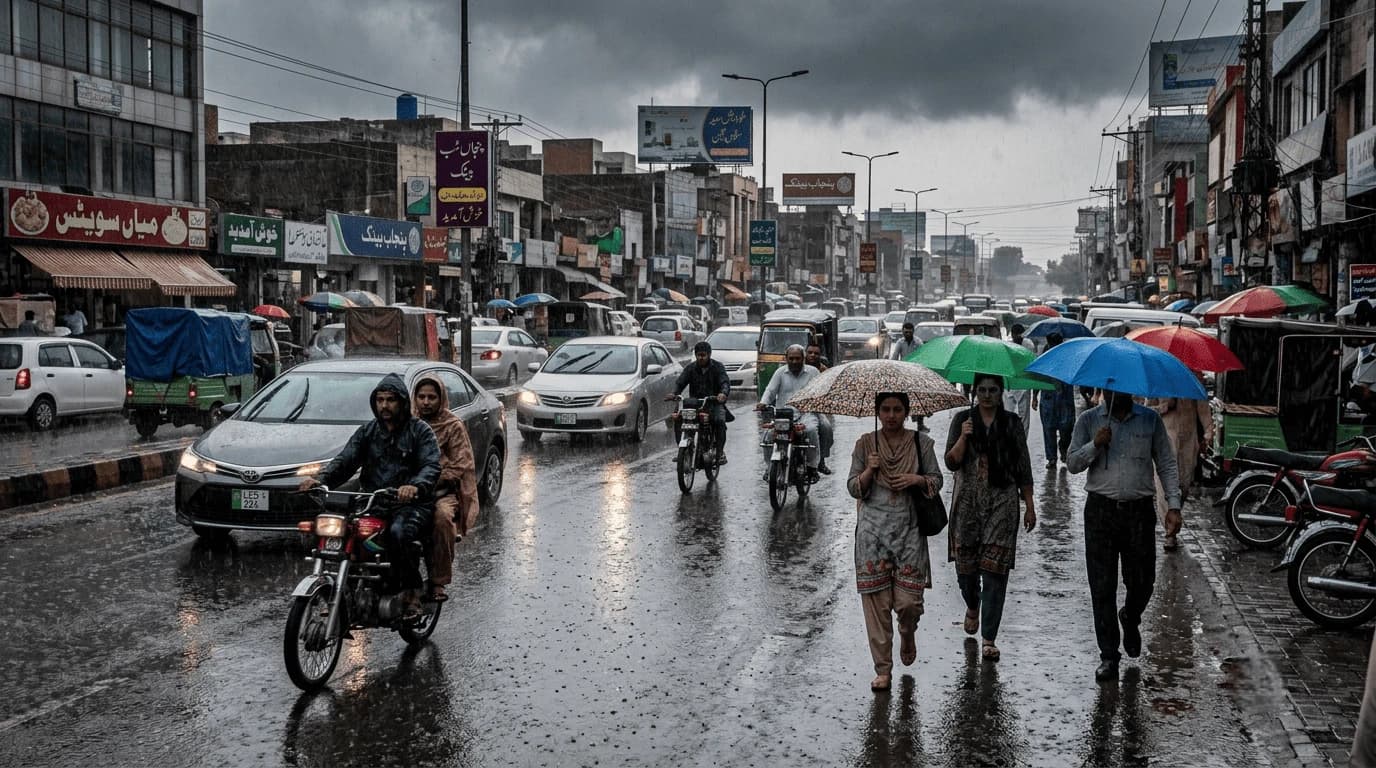
In high-traffic cities like Karachi or Lahore, where quick reflexes and constant awareness are essential, these AI systems offer an extra layer of protection — acting as a second set of eyes on unpredictable roads.
One standout application of AI is Autonomous Emergency Braking (AEB). When the system senses an imminent collision and the driver doesn't react in time, the car applies the brakes automatically. This isn't just about stopping — it’s about minimizing damage and potentially saving lives.
More advanced systems utilize machine learning to comprehend driver behavior and adjust sensitivity levels accordingly. For example, a driver in Islamabad’s stop-and-go traffic may need different response timings than someone on the open highways of Balochistan. AI adapts accordingly, making the vehicle smarter over time.
Beyond braking, collision avoidance systems help steer the vehicle away from danger. Whether it's swerving slightly to avoid an object or staying centered in a narrow lane, these features drastically reduce human error, which still accounts for over 90% of road accidents worldwide.
Several automakers and tech companies are at the forefront of AI-powered safety. Tesla’s Autopilot and Full Self-Driving (FSD) systems use deep learning to navigate roads, detect hazards, and make split-second decisions. Mobileye, an Intel subsidiary, provides vision-based safety tech used by brands like BMW, Nissan, and Volkswagen.
In Pakistan, brands such as Toyota and Honda are also introducing ADAS (Advanced Driver Assistance Systems) in their newer models. While full autonomy may still be a few years away locally, the foundation is already being laid for AI-driven safety on our roads.
Parking can be one of the most stressful parts of driving — especially in tight spaces, narrow streets, or crowded urban areas like Saddar in Karachi or Liberty Market in Lahore. This is where AI-driven self-parking technology becomes a game-changer.
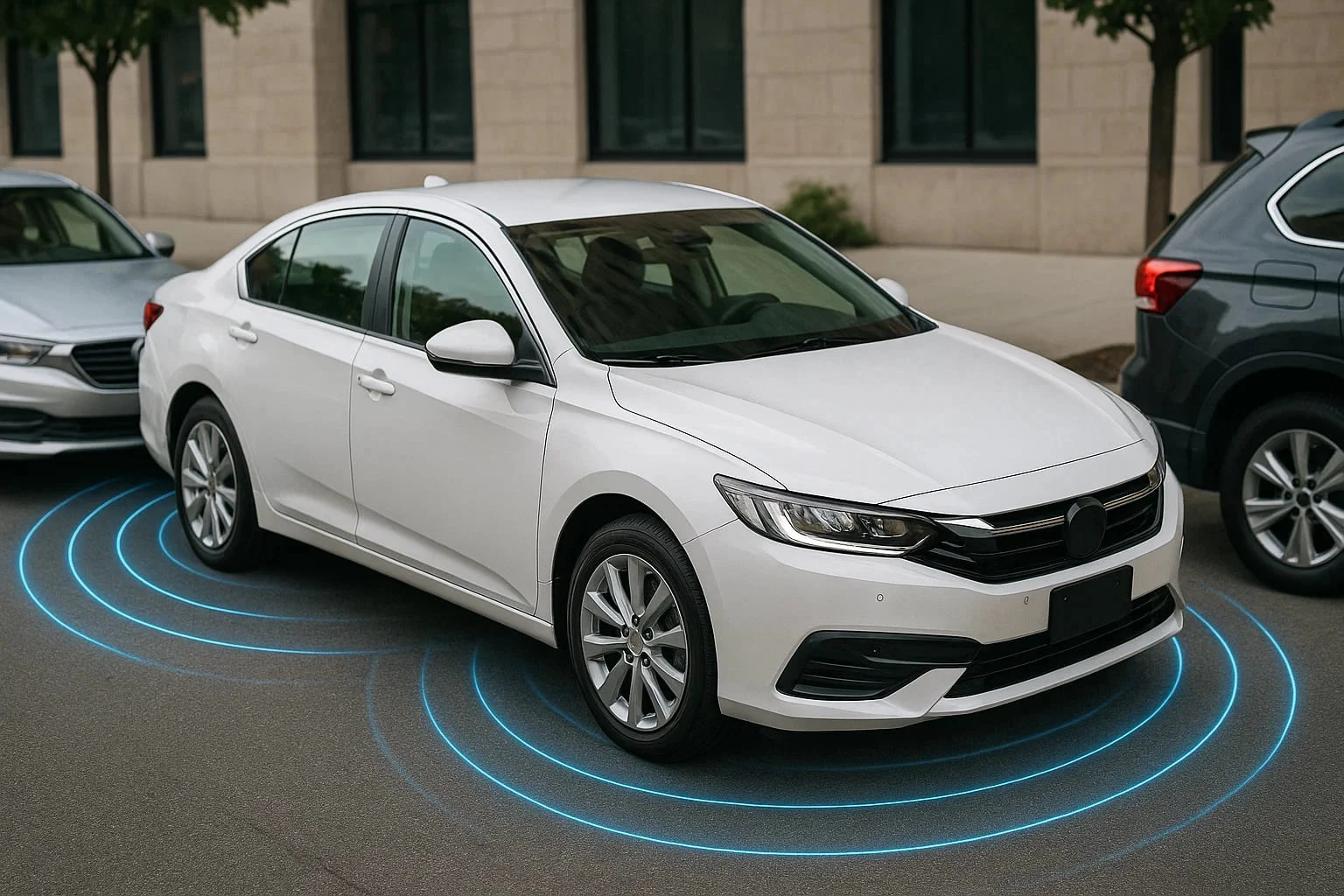
Using ultrasonic sensors, cameras, and radar, the vehicle scans for suitable parking spaces as you drive by. Once a spot is found, the car takes over the steering — and in many cases, the braking and acceleration too — guiding itself smoothly into the space with minimal input from the driver.
This not only reduces the chances of accidental scrapes and bumps but also enhances safety for pedestrians and nearby vehicles. By eliminating human error, AI ensures precise, controlled movements that lower the risk of collisions in tight environments.
Beyond just convenience, self-parking technology improves safety for drivers of all experience levels. New drivers often struggle with parallel parking or reversing into tight spaces — common causes of minor accidents. With AI at the wheel, these situations become far less daunting.
Additionally, the system often comes with surround-view cameras and obstacle detection, offering a full 360-degree view that drivers simply don’t have. In places where small alleys and crowded parking lots are common — like apartment complexes in urban Pakistan — this feature is a practical lifesaver.
More advanced systems now include remote parking, allowing you to step out of the car and let it park itself via your smartphone. Not only is this futuristic, but it's also safer in tight garages or situations where space is too limited to open car doors comfortably.
Looking ahead, AI won’t just park your car — it’ll reserve a parking spot for you, navigate you there, and even guide you through the most efficient route. We’re moving toward fully integrated smart mobility systems, where AI connects with city infrastructure, traffic data, and real-time maps.
Cities like Dubai are already experimenting with smart parking solutions that interact with autonomous vehicles. While Pakistan isn’t there yet, the increasing adoption of AI-based navigation and driver assistance is setting the stage for a future where parking and traffic are handled more efficiently and safely than ever before.
As urban spaces grow denser, AI’s role in simplifying everyday driving tasks — while maintaining high safety standards — will become even more vital.
AI helps prevent accidents by using sensors, cameras, and predictive algorithms to detect hazards in real-time. It can automatically apply brakes, steer the vehicle, or alert the driver — often before a human would even react.
Self-parking technology uses AI, ultrasonic sensors, and cameras to detect a suitable parking spot and guide the car into it with minimal or no driver input. It reduces human error, lowers the risk of minor collisions, and is considered very safe when used correctly.
Brands like Tesla, BMW, Toyota, Honda, and Hyundai are incorporating AI into their vehicles through features like autonomous emergency braking, lane assist, and self-parking systems. In Pakistan, newer models with ADAS features are becoming increasingly available.
The evolution of car safety is no longer just about stronger seatbelts or more airbags — it’s about intelligence. With AI stepping into the driver’s seat, vehicles are now equipped to predict, prevent, and protect in ways we once only saw in science fiction. From automatically applying brakes to navigating tight parking spots, artificial intelligence is making roads safer not just for drivers, but for everyone around them.
Crash prevention systems, powered by machine learning and predictive analytics, are already saving lives by reacting faster than any human can. Meanwhile, self-parking technology is removing stress and reducing fender-benders in busy city environments. Together, these innovations are transforming cars from passive safety machines into active protectors.
What’s more exciting is that this is only the beginning. As more Pakistani cities adopt smart infrastructure and more automakers roll out AI-powered vehicles, we’re heading toward a future where intelligent systems work in harmony with human drivers — or even replace them in some scenarios.
So if you’re in the market for a new car, don’t just look at horsepower or mileage. Look at how the vehicle thinks. Prioritize cars with AI safety features, from adaptive cruise control to autonomous emergency braking. It’s no longer just about convenience — it’s about safety, responsibility, and the future of driving.
The next time your car parks itself or prevents an accident you never saw coming, you’ll know — AI just did its job.
Also Read

An SEO specialist with a strong focus on improving website rankings and search performance.
Experienced in keyword research, on-page optimization, and content strategy.
Skilled at increasing organic traffic and enhancing online visibility.
Uses data-driven methods aligned with search engine best practices.
Committed to delivering sustainable, long-term SEO results.
Pakistan’s hybrid car market is facing fresh price pressure after Budget 2026-27, as tax conce
7 July 2026
Pakistan’s electric vehicle market is becoming more important as fuel prices, import costs and
1 July 2026
Car prices in Pakistan have been a major concern for buyers for years. High duties, taxes, exchange
30 June 2026
Be the first to share your thoughts
No comments yet. Be the first to comment!
Share your thoughts and join the discussion below.