* All product/brand names, logos, and trademarks are property of their respective owners.
Eid-ul-Adha is one of the most important religious festivals celebrated by Muslims around the world. Known as the “Festival of Sacrifice,” it honors the devotion and obedience of Prophet Ibrahim, who was willing to sacrifice his son as an act of faith before God provided a ram in his place.
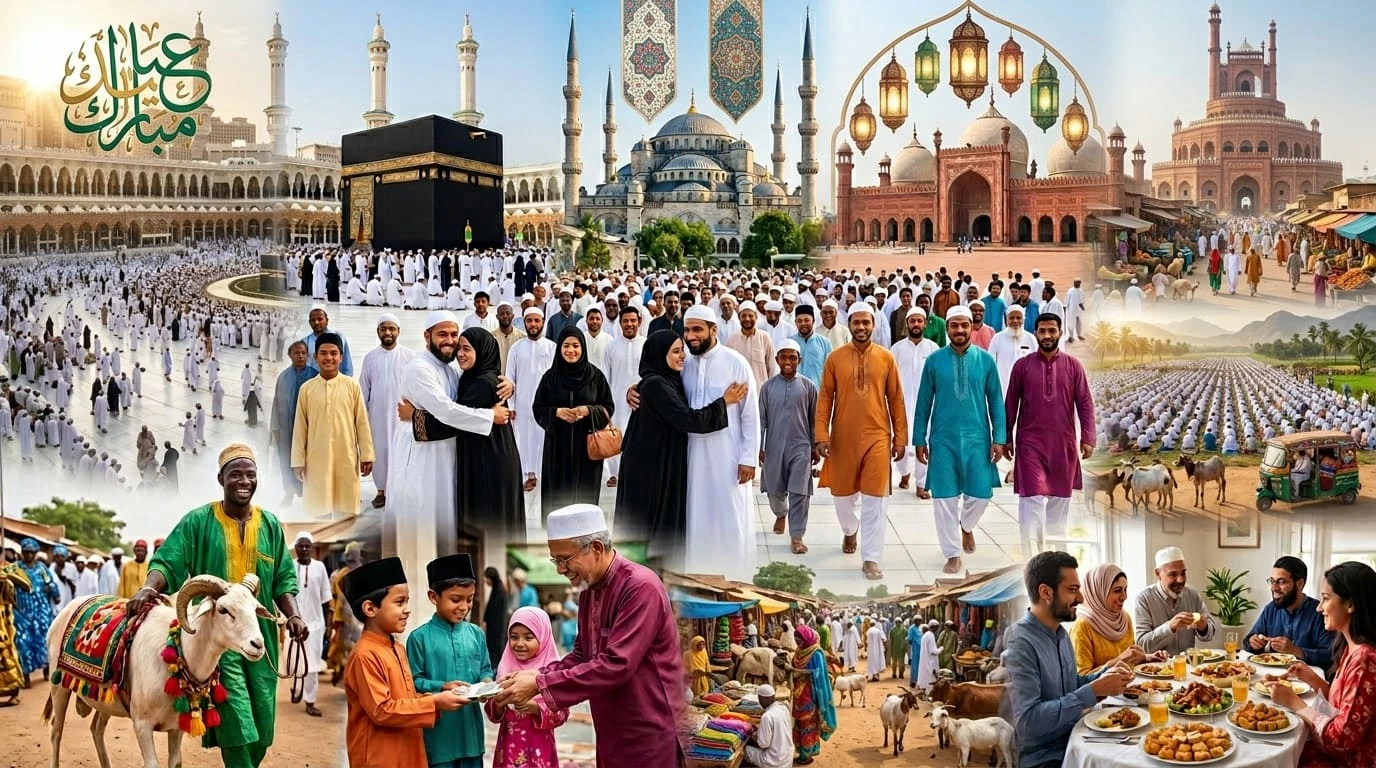
Although the spiritual meaning of Eid-ul-Adha remains the same everywhere, the way people celebrate it can look very different from one country to another. From lively animal markets in Pakistan to community feasts in Nigeria and festive mosque gatherings in the United Kingdom, each culture adds its own traditions, foods, and customs to the occasion.
Despite these differences, the heart of Eid-ul-Adha stays universal — prayer, sacrifice, charity, family, and togetherness. Around the world, Muslims come together to share meals, help those in need, and celebrate with loved ones.
Eid-ul-Adha is special because it is not only a celebration, but also a reminder of faith, sacrifice, and compassion. Muslims observe this day to remember Prophet Ibrahim’s devotion to Allah and his willingness to give up what he loved most. The main traditions of Eid-ul-Adha are shared by Muslims across the world, even though local customs may differ.
Common Eid-ul-Adha traditions include:

What makes Eid-ul-Adha meaningful is this balance between celebration and responsibility. It is a joyful occasion, but it also encourages Muslims to think beyond themselves and care for others.
| Country | Unique Traditions | Popular Eid Foods | Celebration Style |
|---|---|---|---|
| Saudi Arabia | Large Eid prayers near holy cities, meat distribution to the poor, and family hospitality | Kabsa, lamb dishes, rice meals | Spiritual and family-centered |
| Pakistan | Animal markets, decorated sacrificial animals, family BBQs, charity visits | Biryani, kebabs, nihari, karahi | Festive and energetic |
| Turkey | Visiting elders and graves, sharing sweets, and community charity | Roasted meat dishes, baklava, and pastries | Calm and community-focused |
| Indonesia | Mosque-led Qurbani programs, volunteer meat distribution, and neighborhood gatherings | Rendang, satay, gulai | Highly community-oriented |
| Morocco | Traditional clothing, family meals, and tea gatherings | Mechoui, couscous, pastries | Cultural and family-centered |
| Nigeria | Colorful fashion, public gatherings, horse parades, community feasts | Jollof rice, suya, and fried meat dishes | Vibrant and social |
| United Kingdom & United States | Mosque festivals, multicultural celebrations, online greetings, charity drives | Mixed international cuisines, desserts, and BBQ meals | Modern and multicultural |
The table shows how Eid-ul-Adha celebrations differ culturally while still sharing the same values of faith, generosity, and togetherness. Some countries focus more on public gatherings, while others emphasize family traditions or community charity programs.
Even though Muslims around the world celebrate the same festival, Eid-ul-Adha often feels unique in each country because local culture shapes the way people celebrate it.
Food, clothing, language, music, family habits, and even the style of gatherings can vary from place to place. These cultural differences make Eid both globally connected and locally special.
Some of the biggest factors that influence Eid celebrations include:

For example:
The way Eid is celebrated can also differ between cities and villages. In rural areas, celebrations are often more community-based, while urban celebrations may focus more on family gatherings at home or restaurants.
Another important difference is how younger generations celebrate Eid today. Many families now combine traditional customs with modern trends, such as:
Despite these differences, the spirit of Eid-ul-Adha remains the same everywhere — bringing people together through faith, generosity, and shared celebration.
Like many global traditions, Eid-ul-Adha celebrations have evolved with technology and modern lifestyles. While the festival still centers around faith, family, and charity, many people now celebrate in new and more connected ways.
One of the biggest changes is the rise of online Qurbani services. Many families now book animal sacrifices through trusted organizations or apps that handle the process and distribute meat to needy communities around the world.
Modern Eid trends also include:
For Muslims living abroad, technology has made it easier to stay connected with family traditions. A person celebrating Eid in Canada or the UK can now join family gatherings virtually with relatives in Pakistan, Turkey, or Saudi Arabia.
Social media has also influenced Eid fashion, recipes, and decorations. Many people share:
At the same time, many families still try to preserve older traditions by limiting distractions and focusing on prayer, togetherness, and helping others during the holiday.
This blend of tradition and modern life shows how Eid-ul-Adha continues to adapt across generations while keeping its deeper spiritual meaning intact.

Eid-ul-Adha is celebrated in many different ways across the world, but its message remains the same everywhere — faith, sacrifice, generosity, and unity. From the lively streets of Pakistan and Nigeria to the community-centered celebrations in Indonesia and the multicultural gatherings in the UK and USA, each country adds its own cultural flavor to the festival. Food, clothing, public events, and local traditions may differ, yet Muslims around the world come together with the same purpose: to pray, help those in need, and strengthen family and community bonds.
What makes Eid-ul-Adha celebrations around the world so special is this blend of diversity and shared belief. No matter where it is celebrated, the festival continues to bring people together through kindness, gratitude, and togetherness.

Feroza Arshad is a writer and content creator covering a range of subjects including news and current affairs, automobiles, sports, technology and coding, digital marketing, and Google and search trends. Her work appears across several blogs and publications. She focuses on clear, well-researched, and genuinely useful writing — breaking down developments, reviewing products, and explaining technical topics in plain language anyone can follow.
Eid-ul-Adha is one of the most meaningful celebrations in the Islamic calendar, observed by mil
16 May 2026
Walk through any major city in Pakistan in 2026, and the shift is impossible to ignore. From the way
14 April 2026
In 2026, Pakistan is in the midst of a Digital Renaissance, where technology is reshaping creat
20 February 2026
Be the first to share your thoughts
No comments yet. Be the first to comment!
Share your thoughts and join the discussion below.