* All product/brand names, logos, and trademarks are property of their respective owners.
I never thought a smartwatch could change my life. But 90 days later, here I am, healthier, fitter, and more energized than I’ve been in years.
Like many people, I hit a wall with my fitness. No matter how many times I told myself I’d start jogging again or clean up my eating, it never really stuck. I lacked consistency, motivation, and above all, feedback. I had no idea what was actually working.
That’s when I turned to wearable tech.
It started with a single fitness tracker, but quickly evolved into an entire system of smart devices that help me track everything from my steps and heart rate to my sleep cycles and calorie burn. At first, I was skeptical. Could a small screen on my wrist really hold me accountable?
The answer surprised me. It didn’t just hold me accountable — it gave me insight, direction, and a kind of quiet encouragement that kept me moving.
In this blog, I’ll share exactly how wearable tech helped me transform my fitness in just 90 days. From picking the right devices to using the data to shape my habits, this isn’t just a story; it’s a roadmap. If you’ve ever felt stuck in your health journey, this could be the reset you need.
Three months before this journey began, I had one of those moments that hit you hard. I was out of breath walking up a single flight of stairs. My clothes didn’t fit right, and I was always exhausted. But what really did it? A routine check-up where my doctor mentioned my heart rate and blood pressure were creeping into the warning zone.
That’s when I knew: something had to change.
The problem wasn’t that I didn’t care about my health. It was that I had no system to keep track of it. I’d try workouts, diets, or YouTube routines, but I had no way to measure if anything was actually helping. I needed more than motivation — I needed data.
I started researching: smartwatches, fitness trackers, sleep monitors — you name it. It was overwhelming at first. Some devices focused on heart rate and workouts, while others specialized in sleep tracking or stress management.
In the end, I chose a combination that balanced function, affordability, and ease of use:
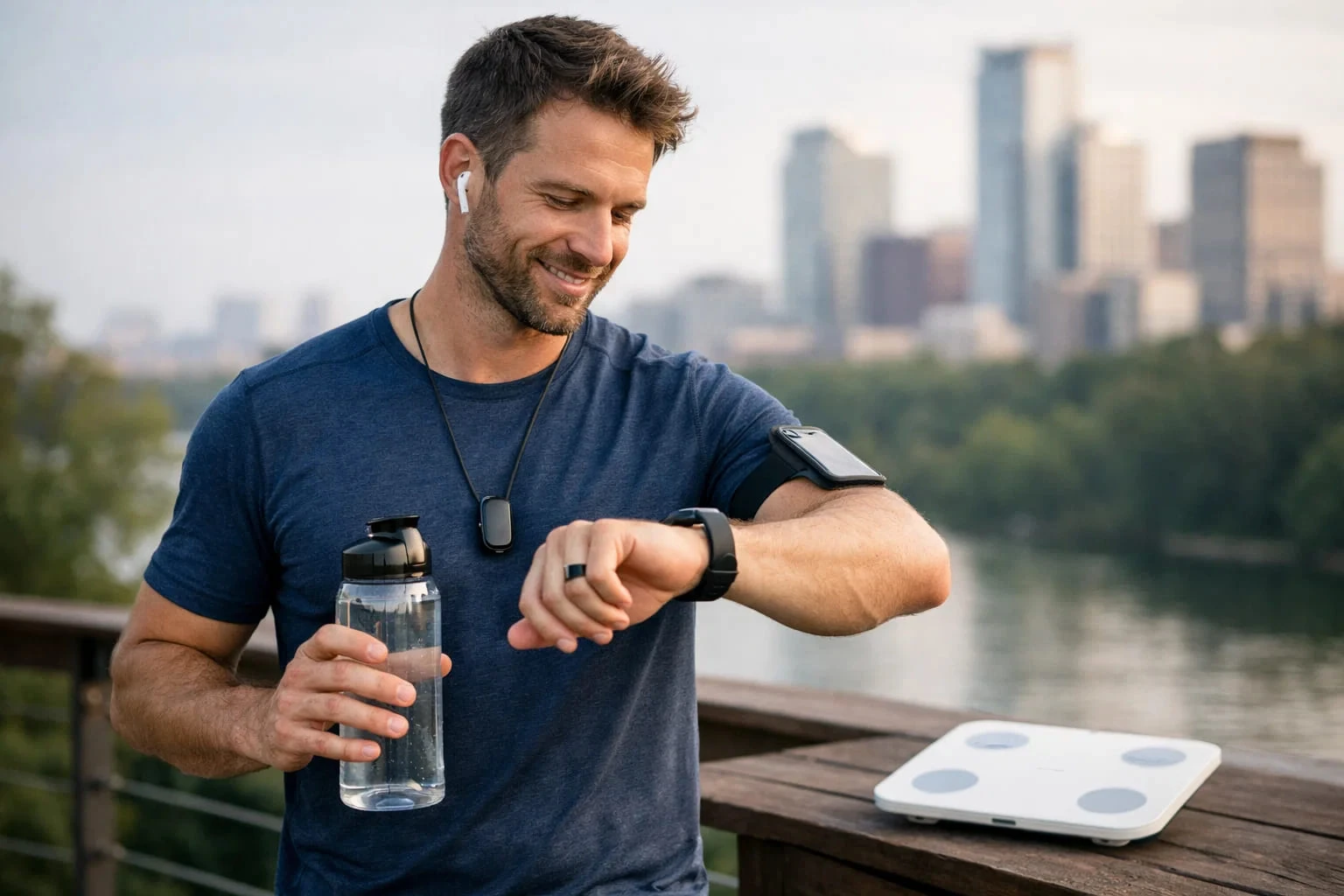
A fitness-focused smartwatch for tracking workouts, heart rate, and calories
A smart ring for sleep and recovery insights
A connected smart scale to monitor body composition over time
I didn’t go for the most expensive options — just reliable tools that worked for everyday use.
Once I had my tools, I treated it like a real challenge — not a casual experiment. I gave myself 90 days to:
Improve my cardiovascular health
Lose a modest amount of weight
Build a daily routine I could actually stick to
Each week, I’d track:
Daily steps and calorie burn
Resting heart rate and sleep quality
Exercise frequency and workout types
My smartwatch nudged me to move every hour. My ring told me when I needed better rest. The scale gave me real progress — not just numbers on a screen.
This was no longer about guessing. I had a game plan, and tech was the coach keeping me on track.
When I started, I figured the wearable devices would just confirm what I already knew — that I wasn’t active enough, and I needed to move more. But what I didn’t expect was how motivating and eye-opening the numbers would be.
Over the 90 days, I watched my resting heart rate drop from 78 to 65 bpm — a sign of better cardiovascular health. My sleep scores improved as I became more consistent with bedtime routines, and my step count nearly doubled by week six, going from 4,000 steps/day to over 8,500.
But even more important than the data were the habits those numbers helped reinforce. Seeing my progress made me want to keep going. On days I was close to hitting a milestone, I’d take an extra walk just to close those rings or hit my step goal. It was a subtle push — but it worked.
Some habits didn’t just help me during the challenge — they’ve become part of my daily life.
Hourly movement reminders: My watch would buzz if I sat too long. Annoying at first, but eventually it became a great nudge to stretch or walk for 2 minutes.
Sleep tracking: Seeing how bad sleep affected my energy the next day made me prioritize winding down at night.
Heart rate zone training: I learned how to work out smarter, not just harder. My watch showed me when I was in fat-burning mode, helping me optimize cardio sessions.
These small, tech-driven habits led to big results — and they were easier to stick to because the devices kept me aware.
Not all features were equal — some made a much bigger impact than others. Here’s what really helped:
Smartwatch fitness tracking: This was my anchor. It gave me real-time feedback on my workouts, step counts, and calories burned. Seeing that data after a jog or gym session was incredibly satisfying.
Sleep monitoring (via smart ring): The daily sleep score helped me understand how rest affected my performance. When my score dipped, my energy tanked — and I had proof.
Smart scale: Weekly weigh-ins became less stressful. I was able to track body fat %, muscle mass, and water retention — not just weight.
By the end of the 90 days, I had lost 6.5 kg, improved my energy, and genuinely felt in control of my health — for the first time in years.
If someone had told me that wearing a watch, stepping on a smart scale, and checking a few daily stats could change my life, I would’ve laughed. But now, after 90 days, I’m a believer.
This journey wasn’t about going from zero to superhero. I didn’t suddenly become a gym rat or follow a perfect diet. What changed was my awareness. Wearable tech gave me clarity — real-time feedback, daily motivation, and a way to measure progress I could actually feel and see.
The biggest takeaway? Small habits, when tracked and reinforced, become lasting behaviors. Whether it was walking more, sleeping better, or understanding how my heart rate changed with each workout, the data helped guide better decisions — one day at a time.
I didn’t need a personal trainer or an extreme plan. I just needed the right tools — and the commitment to check in with myself every day.
So was it worth it? Absolutely.
If you find yourself struggling to progress in your health journey, I strongly recommend utilizing wearable technology. Begin with a basic fitness tracker, a sleep monitoring device, or even a free step-counting application. The most important factor is not the device itself, but your commitment to using it effectively and purposefully.
My journey isn’t over. These initial 90 days represent just the beginning. However, I have now established a structured system, a consistent routine, and a renewed sense of control over my health.
And that, to me, is the best kind of transformation.

An SEO specialist with a strong focus on improving website rankings and search performance.
Experienced in keyword research, on-page optimization, and content strategy.
Skilled at increasing organic traffic and enhancing online visibility.
Uses data-driven methods aligned with search engine best practices.
Committed to delivering sustainable, long-term SEO results.
Pakistan will ban the manufacture, import and sale of conventional reusable syringes from January 1,
7 July 2026
As the world steps into 2026, a chilling headline has emerged from South Asia: the Nipah virus
29 January 2026
When it comes to infectious diseases, timing isn’t just important — it can mean the diff
23 January 2026
Be the first to share your thoughts
No comments yet. Be the first to comment!
Share your thoughts and join the discussion below.


.webp&w=3840&q=75)