* All product/brand names, logos, and trademarks are property of their respective owners.
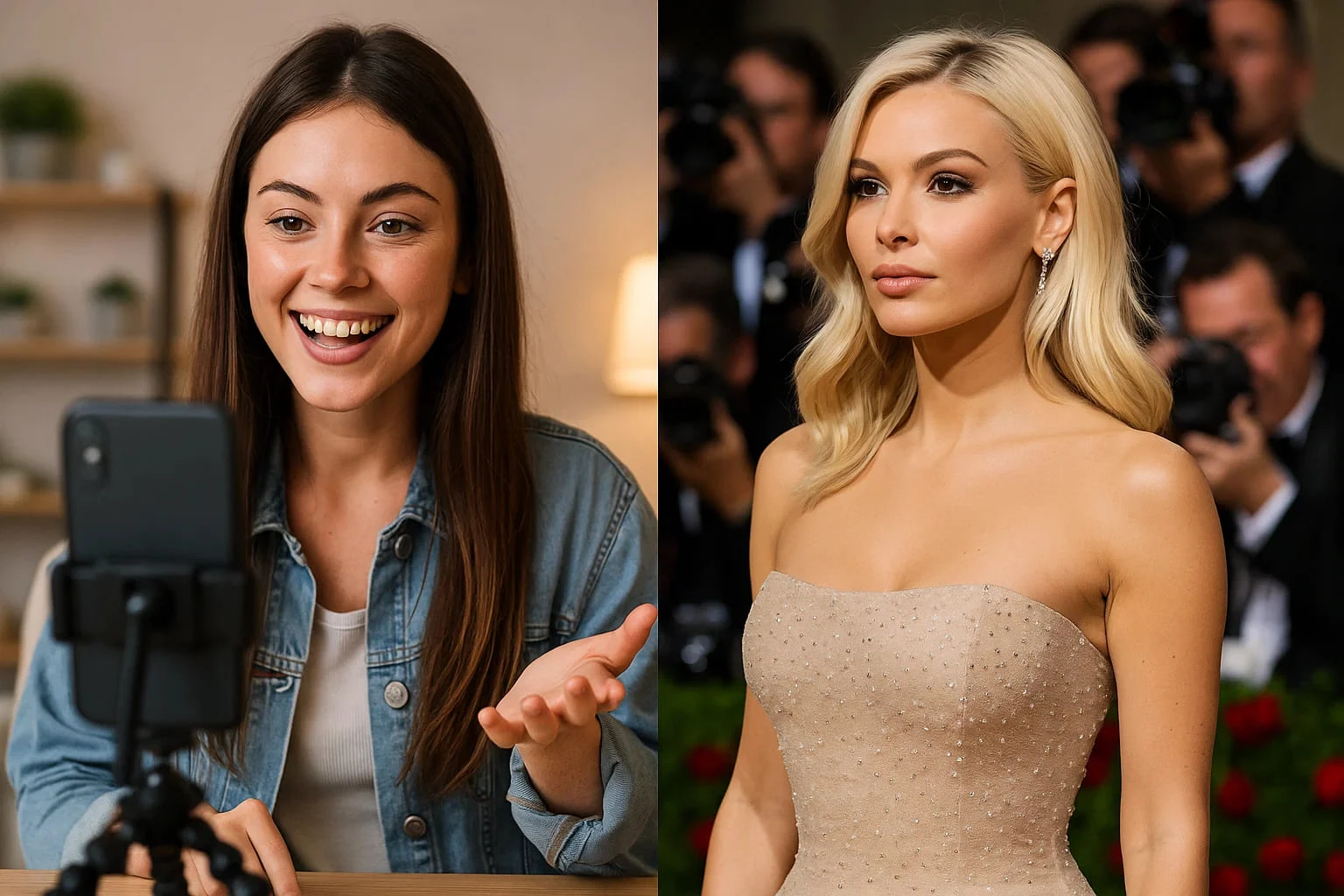
Not long ago, the red carpet was the ultimate stage for pop culture royalty. Movie stars, musicians, and athletes ruled the media, setting trends with every outfit, quote, or public appearance. But the digital age flipped the script. Today, the world’s most powerful trendsetters might not be Hollywood’s finest — they could be someone filming makeup tutorials in their bedroom or doing a viral dance on TikTok. So who really runs pop culture now: influencers or celebrities?
This question isn’t just a matter of opinion — it reflects a massive shift in how we consume media, connect with public figures, and form cultural identities. Traditional celebrities once held exclusive access to fame through big-budget films, TV shows, and global brand endorsements. They were admired from afar, often seen as untouchable icons. But now, influencers — everyday people who build massive online followings — are challenging that hierarchy. They share daily routines, speak directly to fans, and start global trends with a single post.
From what we wear and how we speak to what music we stream or products we buy, both influencers and celebrities shape our daily lives. But they do it in very different ways. Some say celebrities still have the upper hand because of their reach and legacy. Others believe influencers are the new rulers of pop culture, thanks to their relatability, digital presence, and direct audience engagement.
For decades, becoming famous meant climbing a steep ladder — landing movie roles, signing with record labels, or winning sports championships. Fame was reserved for the few who had both talent and the industry’s blessing. But that model has changed. Today, all it takes is a smartphone, a Wi-Fi connection, and a bit of creativity to go viral and build an audience. Enter the age of influencers.
Platforms like Instagram, YouTube, and TikTok have democratized fame. You no longer need to be discovered by an agent or cast in a blockbuster film — now, a well-timed trend or a relatable video can launch an everyday person into global stardom. Think of people like Khaby Lame, who became one of TikTok’s biggest stars without saying a single word, or Pakistani influencers like Romaisa Khan or Dananeer Mobeen, who gained national fame through social media.
Influencers connect with their audience by being relatable, niche-specific, and highly interactive. Whether it's beauty, gaming, food, or lifestyle, there's an influencer for almost every interest. Their power lies not just in being seen, but in being trusted. And that trust has translated into real-world influence.
While influencers were once seen as “internet-famous nobodies,” that’s no longer the case. In fact, many influencers now cross over into traditional celebrity territory. Addison Rae went from TikTok dancer to starring in Netflix films. YouTubers like KSI and Logan Paul have entered the worlds of boxing and business. And in Pakistan, people like Irfan Junejo or Shahveer Jafry are treated like A-list stars, with millions of followers and mainstream media appearances.
On the flip side, traditional celebrities are increasingly adopting influencer strategies. Actors, musicians, and athletes now maintain active social media profiles where they post personal content, collaborate with brands, and engage with fans directly — all hallmarks of influencer culture. Deepika Padukone posts skincare routines, and Will Smith shares raw, humorous videos that humanize him beyond his Hollywood roles.
This blending of roles means that the line between “influencer” and “celebrity” is no longer clear. What matters now is not just who you are, but how you connect with people and how you shape conversations.
In the old media world, reach was everything — how many people saw your movie, heard your song, or watched your interview. Celebrities ruled with global reach, amplified by TV, magazines, and press coverage. But in today’s digital world, engagement is often a more valuable metric. It’s not just about how many people see you — it’s about how deeply they connect, respond, and act.
Influencers often win in the engagement game. Whether it's a beauty influencer whose followers instantly buy a recommended product or a content creator whose posts spark viral conversations, the level of interaction is powerful. Micro-influencers (those with 10K–100K followers) often have higher engagement rates than celebrities with millions of fans — because their audiences feel a personal connection and see them as trustworthy.
On the other hand, celebrities still offer massive brand visibility. A single tweet from a celebrity like Taylor Swift or Shah Rukh Khan can reach tens of millions instantly. But many times, the engagement is passive — more admiration than action. This has led brands to blend strategies: using celebrities for awareness and influencers for conversions.
So, who wins? It depends on the goal. For trust and relatability, influencers take the crown. For massive exposure, celebrities still hold the throne.
Pop culture isn’t just about who’s visible — it’s about who sets the tone. In recent years, we’ve seen influencers take the lead in defining trends across fashion, slang, music, and even politics.
Take fashion, for example. Influencers like Emma Chamberlain have redefined Gen Z style, collaborating with luxury brands and popularizing thrift fashion. TikTok creators can launch music careers (like Lil Nas X’s “Old Town Road”) or make unknown brands go viral overnight. In Pakistan, influencers have played a major role in everything from food trends (think viral street food videos) to youth activism.
What gives influencers this power is the parasocial relationship — the sense that followers “know” them. This emotional bond means their choices feel authentic and aspirational, making followers more likely to adopt their habits, opinions, or purchases. Meanwhile, celebrities — while admired — often seem distant, curated, and less accessible.
Still, celebrities retain strong influence in traditional areas like film, luxury branding, and high-end events. They’re the face of global campaigns, the stars of major award shows, and still dominate the biggest media moments.
But when it comes to shaping the everyday culture of what people wear, say, eat, or share online, influencers are increasingly in control.
In many cases, yes. While celebrities have massive reach, influencers often achieve higher engagement and stronger audience trust. Studies show micro and niche influencers can drive better conversion rates because followers see them as relatable and authentic. Brands often prefer influencers for targeted campaigns, especially in beauty, fashion, and tech industries.
Absolutely. Many celebrities now create influencer-style content to stay relevant in the digital age. From behind-the-scenes videos to personal vlogs and TikTok trends, stars like Will Smith, Priyanka Chopra, and Shahid Afridi engage fans directly online. Modern celebrities often double as influencers, blending legacy fame with social media savvy.
It depends. Celebrities generally have broader, long-term cultural influence through film, sports, or music history. Influencers, however, shape the daily behaviors, language, and purchasing decisions of digital audiences. While a celebrity can create a cultural moment, an influencer can start a movement — especially among younger generations.
The world of fame isn’t what it used to be — and that’s not a bad thing. As social media reshapes how we communicate, connect, and consume, the power dynamics of pop culture have shifted dramatically. Where once only celebrities had the tools and platforms to influence millions, now anyone with a smartphone and a compelling message can build a loyal following and change the cultural landscape.
Influencers have proven that you don’t need to be born into stardom or break into Hollywood to shape what people care about. Their ability to spark trends, build communities, and engage directly with audiences makes them an undeniable force in today’s digital world. Whether it’s through YouTube, TikTok, or Instagram, influencers are driving conversations — from fashion and beauty to politics and social issues — often more intimately and effectively than traditional celebrities.
That said, celebrities haven’t lost their power — they've just had to evolve. Many have adapted to influencer-style engagement, becoming more accessible and relatable online. They still command massive attention and bring cultural weight, especially when it comes to high-profile campaigns, global causes, or mainstream media events.
So who really runs pop culture now? The answer isn’t black and white. Both influencers and celebrities hold power — just in different ways. Influencers often lead the charge in digital spaces, trendsetting in real time, while celebrities remain cultural pillars with broad influence and legacy status.
As we move into the future, the lines will continue to blur — and perhaps the next big cultural icon won’t come from Hollywood or YouTube, but from a mix of both. One thing’s certain: influence today is about connection, authenticity, and presence — and anyone who masters those runs the show.

An SEO specialist with a strong focus on improving website rankings and search performance.
Experienced in keyword research, on-page optimization, and content strategy.
Skilled at increasing organic traffic and enhancing online visibility.
Uses data-driven methods aligned with search engine best practices.
Committed to delivering sustainable, long-term SEO results.
Vijay Salgaonkar’s story was never meant to end quietly.
1 May 2026
In 2026, choosing a streaming platform feels more complicated than ever. What used to be a simple de
17 February 2026
Pakistan’s entertainment scene is alive and electric, but the spotlight is moving. While famil
19 January 2026
Be the first to share your thoughts
No comments yet. Be the first to comment!
Share your thoughts and join the discussion below.