* All product/brand names, logos, and trademarks are property of their respective owners.
Once upon a time, what we watched, listened to, and loved was mostly shaped by what our local TV stations and radio stations decided to air. Our cultural diet was often limited to regional flavors, familiar languages, and homegrown stories. But then something changed—fast.
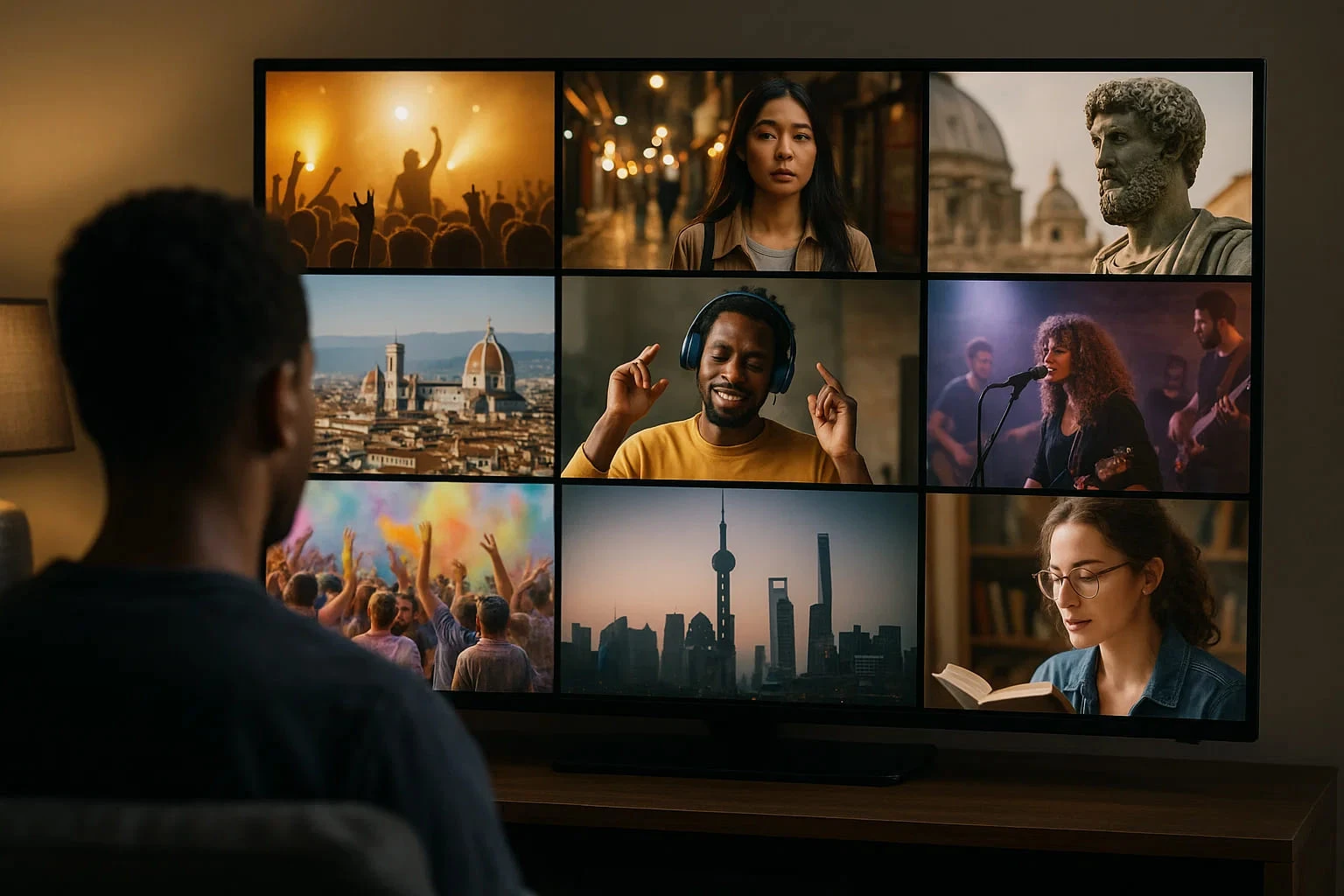
With the rise of global streaming platforms like Netflix, Spotify, Disney+, and YouTube, culture has gone digital—and more importantly, global. Today, a teenager in Karachi might binge-watch a Korean drama, groove to a Nigerian Afrobeats playlist, or quote a Spanish show like Money Heist—all in a single weekend. In this age of “culture without borders,” streaming isn’t just entertainment. It’s a powerful force shaping how we think, speak, dress, and even dream.
Streaming platforms are no longer just content providers. They are cultural gatekeepers and amplifiers, deciding which stories travel across borders and which voices get heard. They’ve transformed not only what we consume but also how we consume it—on-demand, in any language, at any hour. Cultural exchange that once took decades now happens in days.
But while this global interconnectedness brings excitement and exposure, it also raises important questions. What happens to local cultures when global content dominates? Are we embracing diversity or drifting toward cultural sameness? And who really decides what gets recommended to our screens?
In this blog, we’ll dive deep into these questions, exploring how global streaming is transforming culture—what we’re gaining, what we might be losing, and why it all matters.
Streaming platforms have revolutionized how we engage with culture—not just what we watch, but also how we discover, connect, and relate to stories from around the world. Let’s break down the major cultural shifts that have taken place.
In the past, cultural exposure was often limited to whatever was locally available. People mostly watched regional TV, read local newspapers, and followed music from their own country. But streaming platforms have blown that model wide open.
Now, a Turkish historical drama can top charts in Brazil. Spanish thrillers like La Casa de Papel (Money Heist) have cult followings in India. Pakistani series such as Churails can be watched by audiences in the UK, the US, or South Africa. This level of access to global stories was unthinkable just 10 years ago.
Subtitles and dubbing have played a massive role. Netflix alone offers content in over 30 languages. Suddenly, cultural and language barriers don’t seem so tall. Viewers are becoming more adventurous, curious, and open to stories from different corners of the globe.
It’s not just about what’s available—it’s about what’s shown to you. Behind the scenes, complex algorithms analyze your behavior, preferences, and even your watch time to decide what you see next.
These personalized recommendations can feel magical, often introducing viewers to content they didn’t know they’d love. But there’s a flip side. Algorithms also reinforce existing tastes, sometimes limiting real cultural exploration. They can create echo chambers—even in entertainment.
For example, if someone mainly watches American thrillers, they might never get to see that amazing South Korean coming-of-age story or that gripping Nigerian crime drama. So while streaming opens doors, algorithms sometimes quietly close others.
Today’s youth are growing up in a world where their favorite shows, songs, and celebrities are global. K-pop fandoms in Pakistan, anime trends in Egypt, or Afrobeats TikToks in Canada—these aren’t outliers. They’re the new norm.
Streaming has empowered young people to form digital communities beyond borders. They’re sharing memes, creating fan art, debating theories, and learning new languages just to connect with content they love. For many Gen Z and Gen Alpha users, global culture is native culture.
This shift is creating a unique kind of global identity—one that’s not tied to nationality but to shared cultural experiences across streaming platforms.
While global streaming has opened up new opportunities for cultural exchange and creativity, it also brings some complex trade-offs. Let’s explore both the benefits and the challenges this digital revolution poses for local and global cultures.
One of the biggest debates in the streaming age is whether we’re truly celebrating diversity—or simply replacing local uniqueness with global sameness.
On the surface, access to international content fosters understanding, empathy, and appreciation. We’re watching Iranian cinema, listening to K-pop, and learning about Japanese traditions through anime. This kind of exposure was rare a decade ago.
But here’s the concern: as global platforms prioritize content that appeals to mass audiences, cultural nuances can get watered down. Shows may start looking and feeling similar—regardless of where they’re made. A teen drama made in Turkey might begin to mirror one from the US, just to meet “global taste.”
This process is called cultural homogenization—a kind of blending where smaller, localized cultural traits are slowly lost. In the race to go viral, some creators might feel pressured to make content that’s “globally palatable” rather than authentically local.
But it’s not all negative. In fact, streaming has also given a massive boost to creators from smaller markets. Shows like Squid Game (South Korea), Dark (Germany), Sacred Games (India), and even Diriliş: Ertuğrul (Turkey) prove that authentic local stories can find global audiences.
For Pakistani creators, platforms like ZEE5 and Netflix are slowly becoming accessible spaces to showcase original content. A well-made series with strong storytelling and cultural depth no longer needs a big Hollywood-style budget to be noticed.
Streaming has democratized exposure. It’s allowed filmmakers, musicians, and storytellers from developing countries to bypass traditional gatekeepers. In this way, global streaming can be a force for cultural preservation and celebration—if creators hold onto their roots.
Governments across the world are waking up to the cultural influence of streaming platforms. Some are now enforcing local content quotas—rules requiring platforms to produce or showcase a certain amount of national content.
For instance, France and Canada require Netflix to invest in local productions. India has called for content regulation to protect cultural values. Even Australia is considering strict streaming rules to ensure its stories don’t get drowned out by Hollywood or Korean waves.
Should Pakistan follow suit? That’s still up for debate. But as global platforms expand their reach, more countries are realizing the need to protect their cultural heritage—even in digital spaces.
Global streaming has shifted cultural consumption from local and linear to global and on-demand. People now regularly watch shows, movies, and listen to music from different countries, often in different languages. This has increased exposure to diverse cultures, influenced youth behavior, and reshaped global entertainment trends.
Yes and no. While streaming platforms have introduced diverse content to global audiences, they can also promote a certain "global style" that downplays local nuances. Algorithms tend to push popular content, which can lead to repetition and reduce the visibility of truly unique, regional voices—unless creators and viewers actively seek out diversity.
Many countries are implementing policies like local content quotas, requiring platforms to produce or promote national content. Supporting local creators, funding regional productions, and encouraging cultural education can also help ensure that global streaming doesn’t overshadow unique cultural identities.
The rise of global streaming has undeniably transformed the cultural landscape. From binge-watching foreign dramas to discovering new genres of music, our daily lives are now shaped by stories that cross borders faster than ever before. What used to take years to travel now goes viral in hours.
But this transformation isn’t just about access—it’s about identity. Streaming platforms don’t just entertain us; they influence how we see the world and ourselves. The algorithm isn’t neutral—it quietly decides what’s “worthy” of our time and shapes our cultural lens in the process.
We’re living in an era where cultural boundaries are fading, and a shared global culture is emerging—one meme, one song, one episode at a time. Yet amid this exciting fusion, we must also protect what makes us unique. Local stories, languages, traditions, and values need to be championed, not sidelined.
As consumers, we can make a difference. We can choose to watch, share, and support diverse content—especially from underrepresented creators. As citizens, we can advocate for media policies that protect local storytelling. And as creators, we can refuse to dilute our identity just to fit a trend.
Streaming isn’t the enemy of culture—it’s a powerful tool. Like all tools, its impact depends on how we use it. If we’re mindful, we can use it to build bridges between cultures, foster empathy, and celebrate the rich tapestry of human experience—without losing the threads that make each of us unique.
So next time you hit "Play," ask yourself: What culture are you connecting with—and what culture are you supporting?

An SEO specialist with a strong focus on improving website rankings and search performance.
Experienced in keyword research, on-page optimization, and content strategy.
Skilled at increasing organic traffic and enhancing online visibility.
Uses data-driven methods aligned with search engine best practices.
Committed to delivering sustainable, long-term SEO results.
Eid-ul-Adha is one of the most meaningful celebrations in the Islamic calendar, observed by mil
16 May 2026
Eid-ul-Adha is one of the most important religious festivals celebrated by Muslims around the world.
14 May 2026
Walk through any major city in Pakistan in 2026, and the shift is impossible to ignore. From the way
14 April 2026
1 comment on this article
Jan 30, 2026, 05:29 AM
Good
Jan 30, 2026, 05:32 AM
Thank you
Share your thoughts and join the discussion below.