* All product/brand names, logos, and trademarks are property of their respective owners.
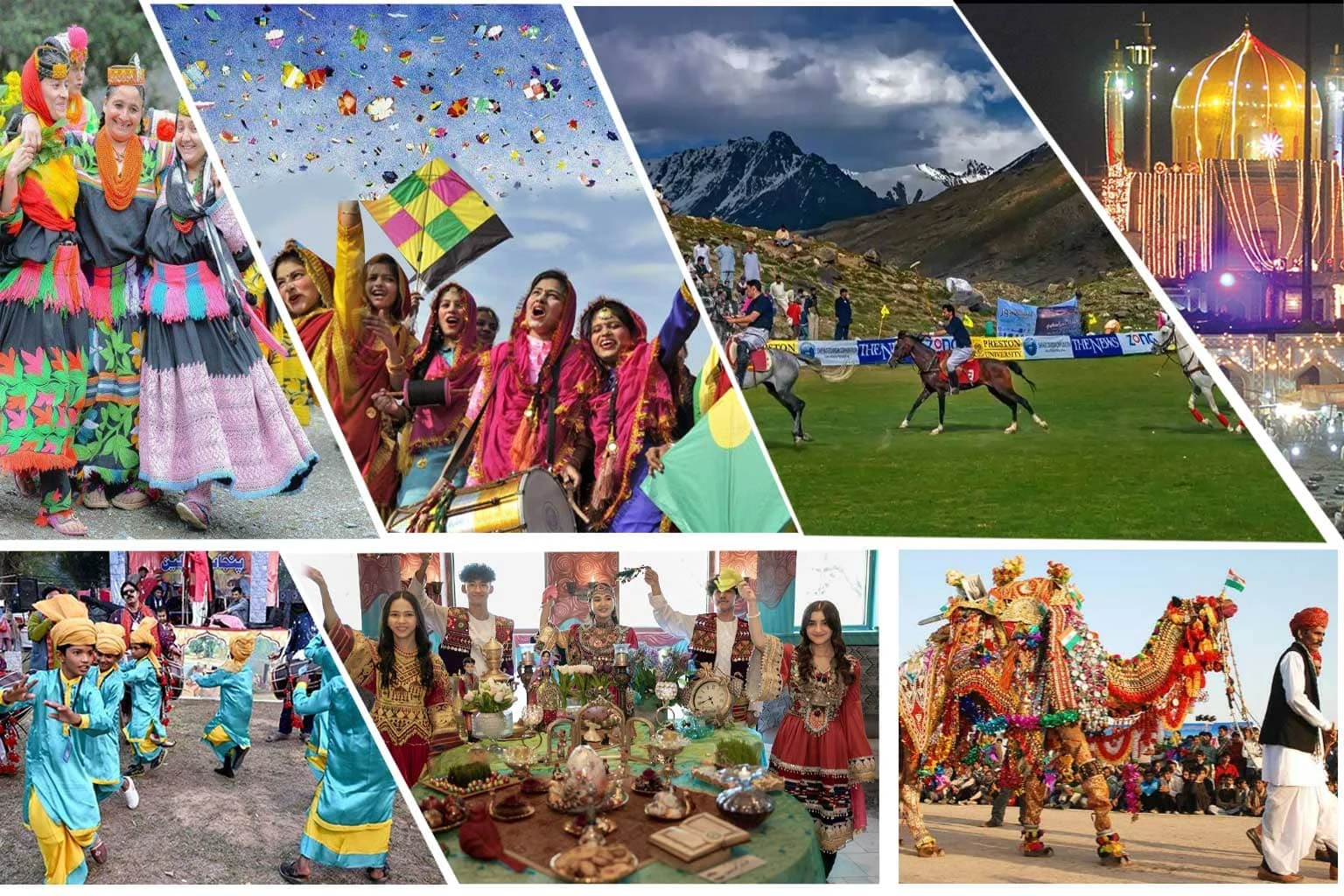
Pakistan is a land bursting with life, color, and culture — and nowhere is that more evident than in its festivals. From the snow-capped peaks of Gilgit-Baltistan to the golden deserts of Balochistan, every corner of the country comes alive at different times of the year with celebrations that are deeply rooted in history, spirituality, and local tradition.
While the world may know Pakistan for its landscapes and food, it's the festivals that truly let you experience the soul of the nation. Whether it’s the thrilling sound of dhol echoing in the streets, vibrant kites dancing in the spring sky, or sacred rituals performed at centuries-old shrines, these events are more than just occasions — they are stories, emotions, and experiences you carry with you forever.
For travelers, these festivals offer an unforgettable way to connect with the heart of the country. They aren’t just spectacles to watch — they’re invitations to participate. Whether you're a local rediscovering your roots or a visitor looking to experience something extraordinary, these cultural festivals in Pakistan provide a unique lens into the nation’s rich heritage.
In this blog, we’ll take you through seven must-see festivals in Pakistan — each one different, each one powerful. From the high-altitude drama of the Shandur Polo Festival to the mystical trance of the Urs at Sehwan Sharif, these events will make you fall in love with Pakistan’s cultural depth.
Ready to explore? Let’s dive into the festivals that you absolutely need to experience at least once in your life.
Every spring, the skies of Lahore used to come alive with a vibrant sea of colorful kites. Basant, a festival marking the arrival of spring, has long been one of Pakistan’s most energetic and joyful celebrations. People dress in bright yellows, rooftops turn into party zones, and the air is filled with music, laughter, and shouts of “Bo kata!”
Although it has been banned in recent years due to safety concerns, the spirit of Basant still lives on in the hearts, especially in Lahore, where the tradition originated. For many, it symbolizes joy, renewal, and cultural pride. If you ever get a chance to witness a legal and safe Basant revival event, don’t miss it.
Imagine watching a polo match at 12,000 feet above sea level. That’s exactly what happens every summer at the Shandur Polo Festival, held at the world’s highest polo ground. Teams from Chitral and Gilgit face off in a fierce, no-holds-barred style of polo, cheered on by passionate crowds.
Beyond the game, the festival is a full-blown celebration of mountain culture — think music, bonfires, dance, and local food. It’s a breathtaking mix of sport, nature, and tradition that leaves a lasting impression.
The Kalash people, a small but vibrant indigenous community living in the remote valleys of Chitral, hold some of the most unique festivals in the world. Their spring (Joshi), summer (Uchal), and winter (Choimus) festivals are colorful, spiritual, and deeply tied to nature.
These celebrations involve singing, dancing, rituals, and communal sharing of food in joy. Visiting a Kalash festival offers a rare look into a pre-Islamic culture that has survived for centuries — a truly unforgettable cultural immersion.
Held in the historic town of Sibi, this festival is a fascinating blend of livestock exhibition and cultural showcase. Originally a cattle market, Sibi Mela has evolved into a major event featuring horse parades, camel races, folk music, and tribal dance performances.
It’s a proud display of Baloch identity, and an excellent opportunity to see traditional crafts, textiles, and tribal customs up close. If you’re looking to experience Balochistan’s rugged charm, this is the event for you.
Celebrated as the Persian New Year, Nowruz marks the beginning of spring and new beginnings. In regions like Hunza and Skardu, it is celebrated with music, family gatherings, traditional sports, and the preparation of special dishes, such as Shir Berenj (milk rice pudding).
The festival brings communities together, emphasizing peace, renewal, and gratitude. It’s a more subdued, reflective celebration compared to others — but rich in meaning and beauty.
Held at the Lok Virsa Museum, this festival is a cultural explosion that brings together artists, musicians, craftsmen, and performers from all over Pakistan. It’s a week-long celebration of everything that makes the country diverse and beautiful.
You’ll find stalls selling handmade crafts, musicians playing folk tunes, dances from all provinces, and plenty of delicious local food. It's like walking through a live, colorful map of Pakistan — perfect for those who want to experience the entire country's heritage in one place.
Every year, thousands gather in Sehwan Sharif, Sindh, to commemorate the death anniversary (Urs) of Sufi saint Lal Shahbaz Qalandar. This three-day event is filled with spiritual energy — with Sufi music, drumbeats (dhamaal), and waves of emotion from devotees.
The festival is a profound spiritual experience. Devotees believe the saint grants wishes and healing, and the atmosphere becomes charged with unity, emotion, and divine love. It’s raw, intense, and deeply moving.
When attending Pakistani festivals — especially those rooted in spiritual or tribal traditions — it’s essential to be mindful of local customs. Modest clothing is a must, especially in more conservative areas. Women should carry a scarf, and men should avoid shorts in public spaces. Always ask before taking someone’s photo, especially during religious events like the Urs at Sehwan or Kalash ceremonies.
Respect the cultural and religious practices, even if they seem unfamiliar. A little Urdu or even a smile goes a long way in making local connections. During events like Nowruz or Sibi Mela, offering simple greetings and showing interest in traditions makes people more open to sharing their stories.
Many of these festivals take place in remote regions or smaller towns, so advanced planning is key. Book your travel and accommodation early — for events like the Shandur Polo Festival or Kalash celebrations, local guesthouses fill up fast.
Pack light but smart. Depending on the festival's season, weather can vary — bring layers for mountain areas like Gilgit-Baltistan and comfortable shoes for walking around markets or uneven grounds. Don’t rely on the internet or mobile service in rural areas; carry paper maps or saved digital ones.
Consider group tours if you’re unsure about logistics — especially for solo travelers visiting tribal regions for the first time.
Sure, the colors are Instagram-worthy, but the true essence of these festivals lies beyond the lens. Take time to talk to locals, try regional food, and learn the story behind the music and dance. At Urs festivals, the trance of the dhamaal or a Qawwali performance is something to feel, not just film.
Engage in conversations, buy local crafts, and participate where you’re welcomed. These moments — dancing with Kalash children, eating chapshuro in Gilgit, or listening to an elder talk about Basant days gone by — are the memories that last a lifetime.
Pakistan’s festivals are more than just events on a calendar — they are living, breathing expressions of its people, its history, and its soul. Each one offers a unique window into the country’s incredible diversity — from the spiritual ecstasy of the Urs in Sehwan Sharif to the joyous kite-flying skies of Basant in Lahore, and from the tribal pride of Sibi Mela to the serene spring rituals of Nowruz in the mountains.
These are not festivals you simply attend — they’re experiences that pull you in, shake your senses, and stay with you long after they’re over. You feel the rhythm of the dhol, taste the spice in the street food, and hear stories passed down through generations.
Whether you're a Pakistani looking to reconnect with your roots or a traveler seeking something raw and real, these seven festivals are must-sees. They’ll show you a side of Pakistan that’s often hidden — full of color, culture, celebration, and connection.
So go ahead — pick one. Plan your visit. Immerse yourself in the energy, the people, and the traditions. You’ll come back with more than photos — you’ll return with stories, friendships, and memories to last a lifetime.
Which festival would you love to experience first? Let us know in the comments or share your favorite festival moment!
Also Read
How Pakistani Cultural Festivals Are Inspiring and Captivating the World

An SEO specialist with a strong focus on improving website rankings and search performance.
Experienced in keyword research, on-page optimization, and content strategy.
Skilled at increasing organic traffic and enhancing online visibility.
Uses data-driven methods aligned with search engine best practices.
Committed to delivering sustainable, long-term SEO results.
Eid-ul-Adha is one of the most meaningful celebrations in the Islamic calendar, observed by mil
16 May 2026
Eid-ul-Adha is one of the most important religious festivals celebrated by Muslims around the world.
14 May 2026
Walk through any major city in Pakistan in 2026, and the shift is impossible to ignore. From the way
14 April 2026
Be the first to share your thoughts
No comments yet. Be the first to comment!
Share your thoughts and join the discussion below.