* All product/brand names, logos, and trademarks are property of their respective owners.
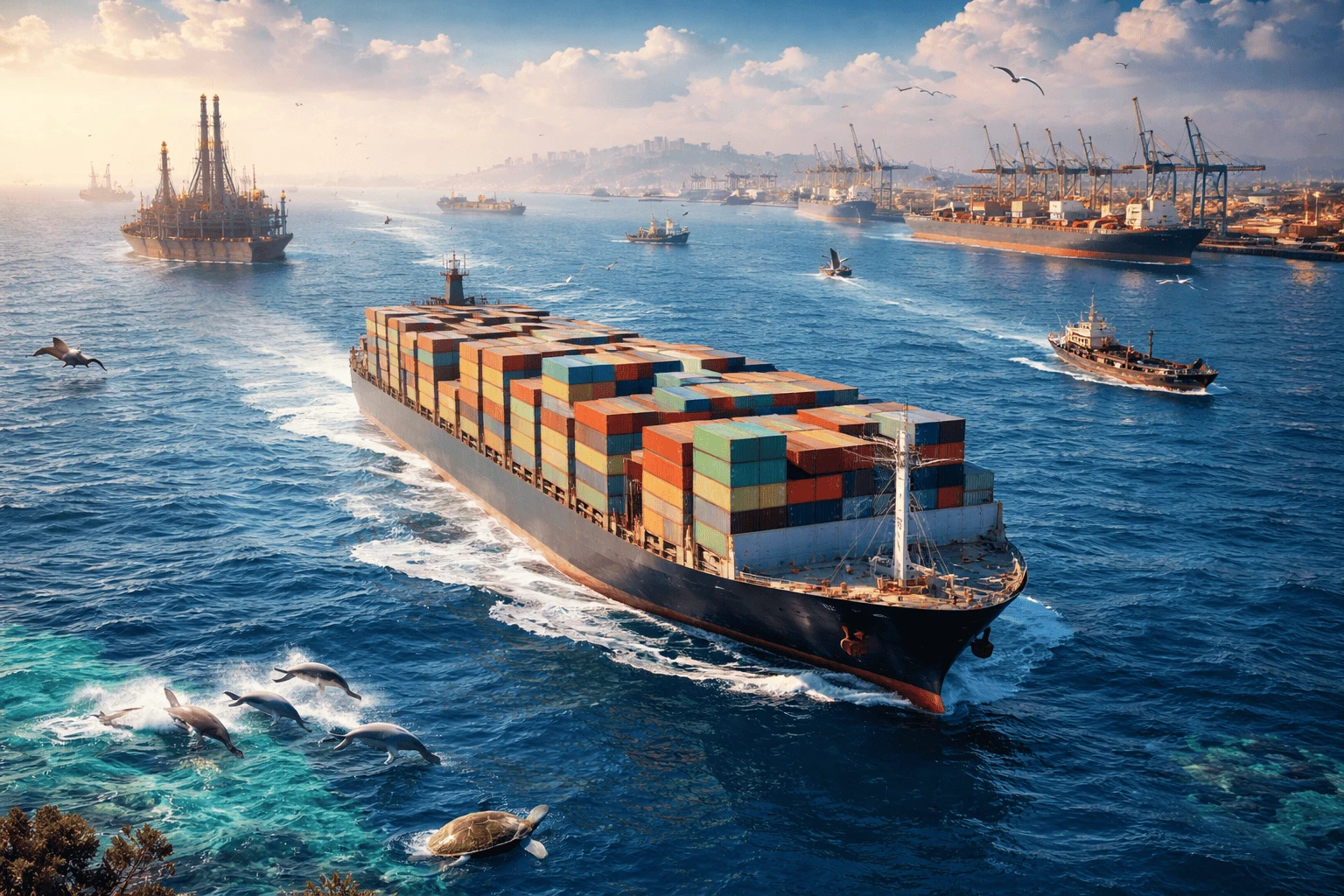
The Arabian Sea isn’t just a stretch of water between countries — it’s one of the world’s most active and strategically important regions for both global trade and climate systems. Every day, massive cargo ships, oil tankers, and fishing vessels move across its waters, quietly supporting economies from Asia to Europe.
What makes the Arabian Sea especially important right now is how deeply it’s tied to current global realities. Rising geopolitical tensions, shifting trade routes, and increasing energy demand have made this region more critical than ever. At the same time, warming sea temperatures and changing weather patterns are turning it into a key player in climate discussions, particularly for South Asia.
From the flow of oil through the Strait of Hormuz to the role it plays in powering monsoon rains, the Arabian Sea sits at the intersection of economic survival and environmental stability. Understanding its importance today means looking beyond maps — and seeing how it directly affects trade, livelihoods, and climate across the globe.
The Arabian Sea matters because of where it sits on the map and what now moves through it. It links the Middle East, South Asia, and East Africa, while also feeding directly into the wider Indian Ocean system. That makes it one of the world’s most valuable maritime spaces for both commerce and strategy.
In the current situation, that location has become even more important. Trade flows have already been under pressure from route disruptions and wider geopolitical instability, and the Arabian Sea has become part of the corridor countries and shipping companies watch most closely. UNCTAD has warned that maritime trade is facing fragile growth, rising costs, and reconfigured routes, while recent disruption monitoring from the IMF and UNCTAD shows how quickly shocks around the Strait of Hormuz can affect traffic linked to the Arabian Sea.
A big reason is its connection to the Strait of Hormuz, one of the most sensitive chokepoints in the global economy. UNCTAD says this corridor carries around a quarter of global seaborne oil trade, along with important volumes of liquefied natural gas and fertilizers.
This location also gives the Arabian Sea direct relevance for countries like Pakistan. Ports along its coast, especially Karachi and Gwadar, are tied to trade access, logistics planning, and long-term infrastructure ambitions. That is one reason Pakistan continues to treat its Arabian Sea coastline as an economic and strategic asset, not just a geographic feature.
In simple terms, the Arabian Sea is strategically powerful because it connects:
The Arabian Sea plays a direct role in keeping global trade moving, especially when it comes to energy, raw materials, and manufactured goods. In today’s environment—where supply chains are already under pressure—this region has become even more critical.
The Arabian Sea is part of one of the busiest maritime corridors in the world. Ships traveling between Asia, Europe, and the Middle East pass through these waters daily.
Key reasons these routes matter:
In the current global situation, companies are paying closer attention to these routes due to rising shipping costs, delays, and geopolitical risks.
One of the biggest reasons the Arabian Sea is so important is its direct link to the Strait of Hormuz.
This narrow passage is a lifeline for global energy supply:
A significant portion of the world’s oil exports passes through it
It is critical for LNG (liquefied natural gas) shipments
Any disruption here can quickly impact fuel prices worldwide
Even minor tensions or security concerns in this area can cause ripple effects across global markets, making the Arabian Sea a constant focus for governments and businesses.
Several major ports along the Arabian Sea coastline are central to regional and international trade. These ports are not just local hubs—they connect entire economies to the global market.
Important ports include:
Together, these ports and sea routes make the Arabian Sea a backbone of international trade, especially at a time when global supply chains are being reshaped.
For countries surrounding it, the Arabian Sea isn’t just a trade route—it’s a major source of economic activity, jobs, and long-term growth. In the current situation, where economies are trying to stay resilient amid global uncertainty, its role has become even more significant.
Countries like Pakistan, India, Oman, and the UAE rely heavily on the Arabian Sea for multiple economic sectors:
Regional trade moves through ports connected to the Arabian Sea. Essential goods like oil, machinery, food, and textiles depend on these routes.
People depend on fishing for income and food supply. Coastal communities, especially in Pakistan and India, rely directly on the sea for their livelihoods.
Ports, shipping companies, and logistics networks create employment across:
Projects like CPEC (China-Pakistan Economic Corridor) have increased the strategic and economic value of the Arabian Sea:
The Arabian Sea is not only a trade corridor. It is also a major climate driver for South Asia and nearby coastal regions. What happens in these waters can influence rainfall, storm intensity, marine ecosystems, and the daily lives of millions of people. That matters even more now because the broader region has been warming rapidly, and recent research points to stronger heat extremes, more marine heatwaves, and greater weather volatility.
The Arabian Sea plays a central role in the South Asian monsoon because it supplies heat and moisture to the atmosphere. Those air-sea interactions help shape rainfall patterns over countries such as Pakistan and India.
This is a current concern, not just a long-term one. As sea temperatures rise, the relationship between ocean warming and seasonal rainfall becomes more unstable. For farming economies that depend on predictable monsoon timing, even small disruptions can have large effects on crops, water availability, and flood risk.
The Arabian Sea has historically seen fewer tropical cyclones than some nearby basins, but that pattern has been changing. Recent studies report a sharp increase in the frequency and intensity of tropical cyclones in the Arabian Sea in recent decades, including more cases of rapid intensification.
That trend matters for countries along the coast because stronger cyclones can bring:
For a region already dealing with climate stress and dense coastal populations, that raises both humanitarian and economic risks. It also means the Arabian Sea is becoming more important in disaster planning and climate adaptation.
Alongside its economic and climate importance, the Arabian Sea is facing a growing set of environmental challenges. These issues are becoming more visible today as human activity increases and climate pressures intensify at the same time.
Oil spills, industrial waste, and plastic pollution are major concerns. Busy shipping lanes increase the risk of accidents, while coastal cities contribute to waste entering the sea.
High demand for seafood has led to overexploitation in some areas. This threatens fish populations and directly impacts the livelihoods of coastal communities.
Rising sea temperatures and pollution are damaging coral reefs and marine habitats. These ecosystems are essential for biodiversity and fisheries.
Parts of the Arabian Sea already have low oxygen levels. Climate change is making this worse, which can reduce marine life survival.
The importance of the Arabian Sea has grown sharply in recent years, not because it changed, but because the world around it has.
Supply chains are no longer as predictable as they once were. Conflicts, route disruptions, and rising shipping costs have forced countries and companies to rethink how goods move across the world.
In this situation, the Arabian Sea stands out because:
Any disruption in this region now has faster and wider global consequences than before.
At the same time, climate pressures are intensifying:
The region has also become a focus of global attention due to:
For countries like Pakistan, this means the Arabian Sea is not just an economic asset—it is a strategic one that can shape long-term growth and regional influence.
Today, the Arabian Sea sits at the center of three powerful forces:
How countries manage this balance will determine whether the Arabian Sea remains a stable engine of growth—or becomes a source of risk.
The Arabian Sea matters because it connects more than just coastlines—it connects economies, energy flows, and climate systems that millions of people depend on every day.
From powering global trade routes to shaping monsoon patterns, its influence reaches far beyond the region. And in the current global situation, where supply chains are shifting and climate risks are rising, its role has only become more critical.
Understanding the Arabian Sea's importance today means recognizing one simple fact: what happens in these waters doesn’t stay there—it affects the world.

I am Zeenat, an SEO Specialist and Content Writer specializing in on-page and off-page SEO to improve website visibility, user experience, and performance.
I optimize website content, meta elements, and site structure, and implement effective off-page SEO strategies, including link building and authority development. Through keyword research and performance analysis, I drive targeted organic traffic and improve search rankings.
I create high-quality, search-optimized content using data-driven, white-hat SEO practices, focused on delivering sustainable, long-term growth and improved online visibility.
Pakistan has moved three major international airports into its airport outsourcing and privatisation
7 July 2026
Karachi’s Surjani area has received a new NADRA Mega Centre aimed at improving access to ident
7 July 2026
LAHORE: The Provincial Disaster Management Authority Punjab has issued a rain alert as showers, wind
7 July 2026
Be the first to share your thoughts
No comments yet. Be the first to comment!
Share your thoughts and join the discussion below.