* All product/brand names, logos, and trademarks are property of their respective owners.
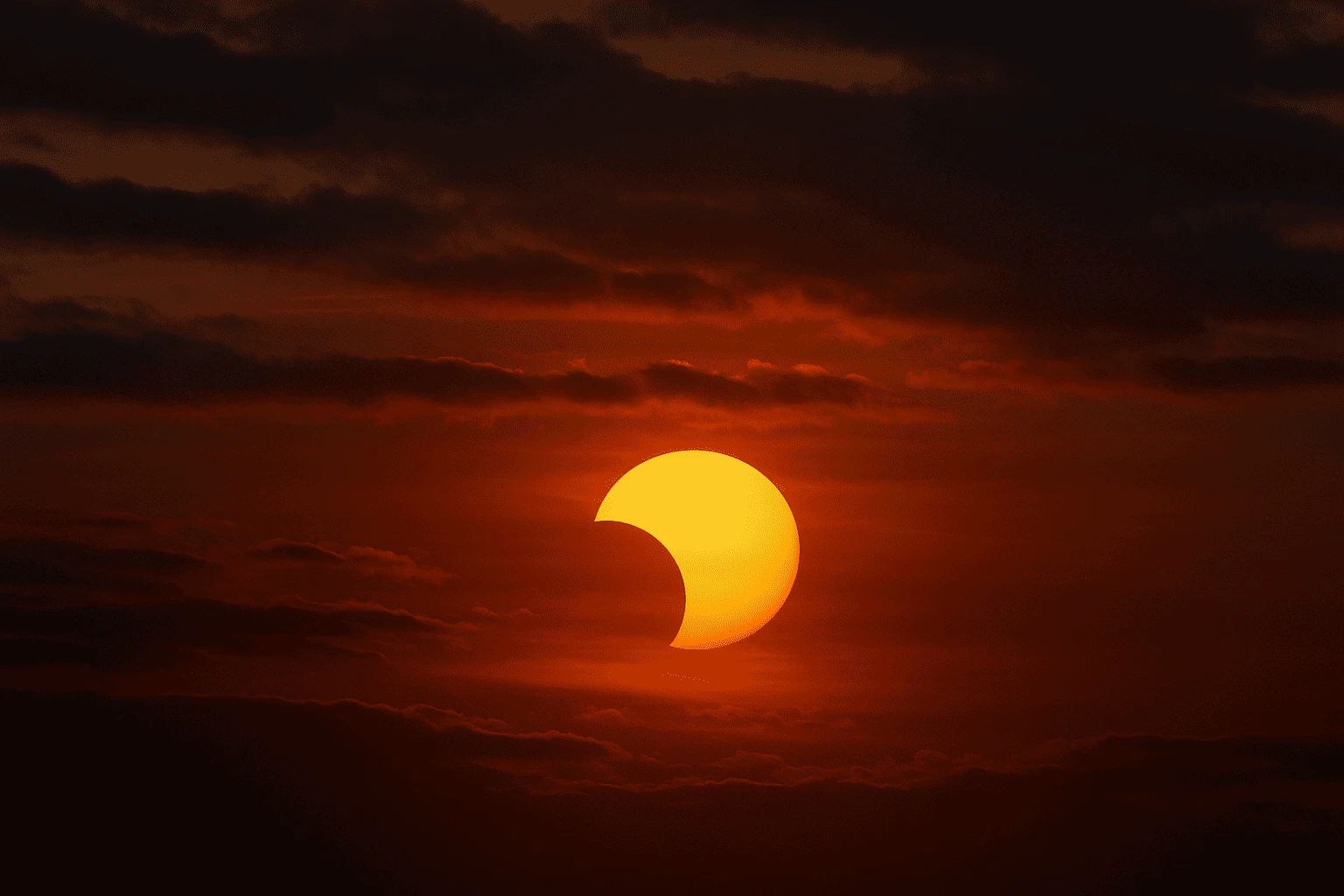
A fascinating sky event is just one week away. On Saturday, September 21, 2025, a partial solar eclipse will take place. While it won’t be visible everywhere, people in a few southern parts of the world will get to see a rare and beautiful sight.
A partial solar eclipse happens when the Moon moves between the Earth and the Sun but only blocks part of the Sun. It’s not a full blackout like a total eclipse, but the Sun will look like it has a “bite” taken out of it.
This eclipse will be a deep partial eclipse, which means in some places, more than 80% of the Sun will be covered making it more dramatic than usual.
The eclipse won’t be seen across the whole world. It will only be visible in parts of the Southern Hemisphere.
🌍 Main viewing areas include:
Southern New Zealand
Tasmania (Australia)
Some areas in Antarctica
Parts of the South Pacific Ocean
People in North America, Europe, Asia, and most of Africa won’t be able to see this eclipse directly.
Here are the key times for the eclipse in UTC (Universal Time):
Starts: 10:03 AM UTC
Peaks: 11:18 AM UTC
Ends: 12:33 PM UTC
If you’re in the viewing zone, check local times for your city or region. It’s best to be ready early so you don’t miss anything.
If you’re in a place where the eclipse will be visible, do not look at the Sun directly. It can seriously damage your eyes.
Safe ways to watch:
Use eclipse glasses with proper certification (ISO 12312-2)
Use a pinhole projector to watch it indirectly
Never use regular sunglasses or look through a camera lens, telescope, or binoculars without a solar filter
Yes! Even if you can’t see it from where you live, you can still watch it online. Many space and science websites will stream the eclipse live.
🔴 Live streams will be available on:
NASA TV
Time and Date Live
Popular astronomy YouTube channels
You can enjoy expert commentary, safe views, and amazing camera angles from places where the eclipse is visible.
This eclipse is special because it’s happening just one day before the September equinox when day and night are about the same length all over the world. This rare timing makes the eclipse even more interesting to astronomers and sky lovers.
Also, the eclipse will pass over some of the most remote parts of Earth, like Antarctica and the Southern Ocean, which makes it a unique event for scientists and eclipse watchers.
If you're not in the path of this eclipse, don’t worry. More eclipses are coming in 2026 and 2027, some of which will be visible in more places around the world.
For now, mark your calendars for September 21. Whether you’re watching in person or online, this partial solar eclipse is sure to be a memorable moment in the sky.

No bio available yet.
Pakistan has moved three major international airports into its airport outsourcing and privatisation
7 July 2026
Karachi’s Surjani area has received a new NADRA Mega Centre aimed at improving access to ident
7 July 2026
LAHORE: The Provincial Disaster Management Authority Punjab has issued a rain alert as showers, wind
7 July 2026
Be the first to share your thoughts
No comments yet. Be the first to comment!
Share your thoughts and join the discussion below.